What It Will Take to Raise the Value of Carbon Credits
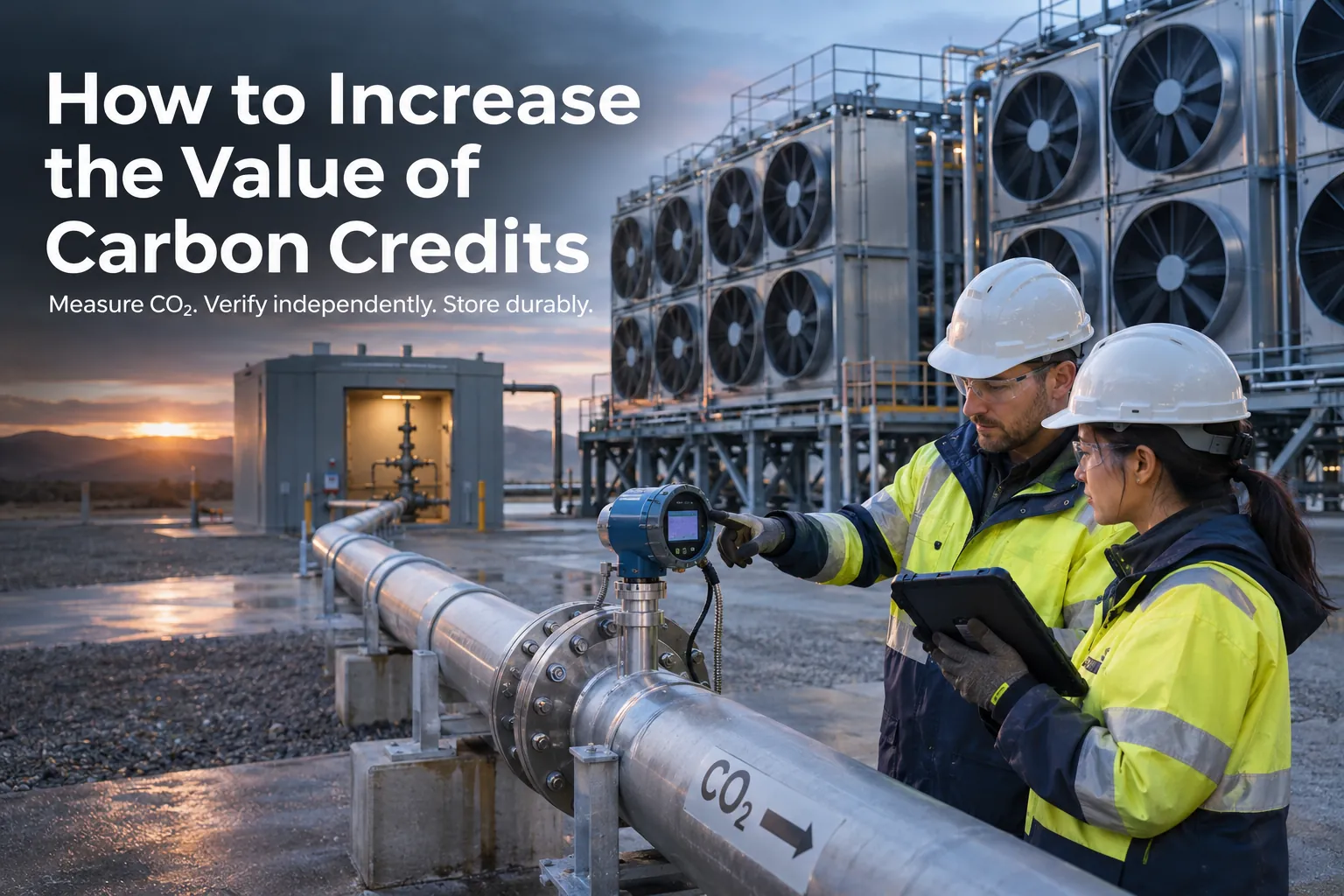
The carbon market treated a tonne as a tonne for a long time. A credit was a credit, and the cheapest one often won.
That is starting to change. Buyers are paying more for quality, and the gap is getting wider. If the shift holds, the value of a carbon credit will rise for projects that can prove a real, lasting climate effect. It will fall for the ones that cannot.
Quality is finally showing up in the price
The Integrity Council for the Voluntary Carbon Market set a clear benchmark with its Core Carbon Principles. Among them: additionality, permanence, conservative quantification, no double counting, and independent verification.
The label is not a guarantee on its own. It is a threshold. Project-level ratings then help buyers compare credits that already clear that bar.
The market is responding. Independent analysis published this year found that the highest-quality credits are now valued close to 50 percent more than the lowest-quality ones, up from roughly 30 percent a year earlier. Credits tied to Core Carbon Principles methodologies have also begun to trade at a premium to the broader market.
That is how a commodity market matures. Price starts to follow integrity, not just volume or storytelling.
A durable removal is not the same product as a cheap avoidance credit
Avoidance credits still make up most of what registries issue. They can be useful when the underlying project is additional and well measured. But they are not the same thing as a tonne of carbon taken out of the atmosphere and stored for a long time.
Buyers already treat them differently. On one of the larger trading platforms, removals designed to keep carbon out of the air for more than a century have recently cleared at nearly ten times the price of shorter-lived removals, and far above the average for avoidance credits. Demand for durable removal is running ahead of what the market currently supplies.
This is close to the work I care about in climate technology. Materials that capture carbon from air or from industrial exhaust only create lasting value if the CO₂ stays put, if performance can be tested under real conditions, and if the next batch behaves like the last one. Those are the same questions a serious credit buyer should be asking.
New demand is arriving, but it will be selective
Two policy channels will matter over the next few years.
The first is aviation. CORSIA, the international scheme for airline emissions, is already in its first compliance phase. Airlines will need eligible units, and the pool of credits that qualify is narrower than the voluntary market as a whole.
The second is Article 6 of the Paris Agreement. The institutional plumbing is largely in place: national authorities, bilateral agreements, and a growing pipeline of activities. Contracted sovereign demand is still modest relative to the supply that has been announced. That gap will close only if the credits on offer can stand up to corresponding adjustments and public scrutiny.
In both cases, demand does not lift every credit equally. It lifts the ones that meet a standard.
Trust depends on how we measure
None of this holds if measurement, reporting, and verification remain slow, opaque, or easy to game.
Digital MRV — sensors, satellite data, and well-governed models — can tighten that process. Artificial intelligence can help detect anomalies, estimate fluxes, and keep a continuous record instead of a once-a-year snapshot. This year, the Integrity Council and the World Bank published guidance on how those tools should be governed: transparent methods, approved software, clear accountability, and independent review that looks at the system, not only the PDF.
AI does not replace integrity. It can make integrity cheaper and more consistent, if we insist on seeing how the model was trained, what data it uses, and who is responsible when it is wrong.
What should happen next
If we want carbon credit value to rise, we should stop hoping for a general price rally and start being specific.
Buyers should pay for quality and durability, and be willing to walk away from credits that cannot show either. Project developers should move to high-integrity methodologies, even when that means issuing fewer tonnes. Policymakers should keep CORSIA and Article 6 demanding, not convenient. And the builders of climate technology, including those of us working on capture materials and digital tools, should treat measurement as part of the product, not an afterthought.
A credit is a claim about the atmosphere. The market will only value that claim more highly when it can trust it.